Efflorescence & Salt Film Removal for Brick Patios in Garden City
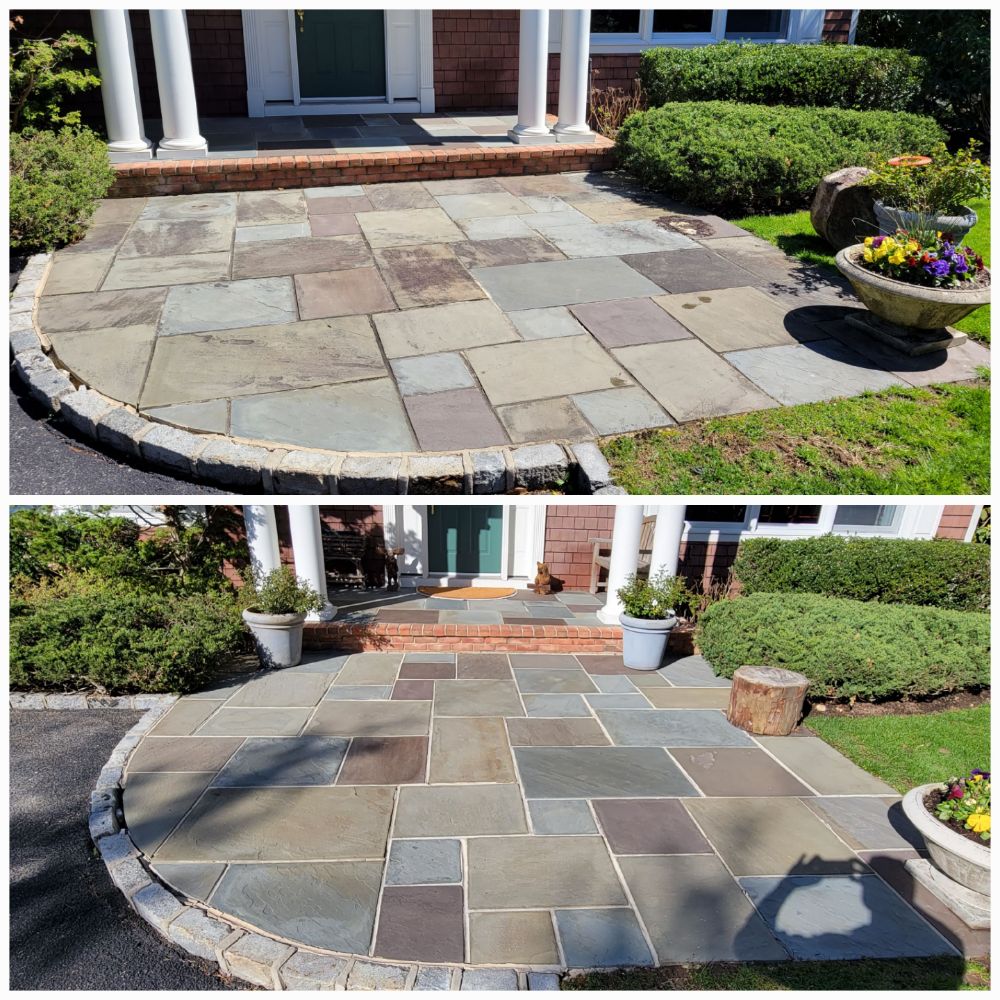
White haze creeping across your brick patio is more than a cosmetic issue. In Garden City, winter salt, irrigation spray, and porous clay pavers often combine to form stubborn mineral crusts that dull color and trap grime. Many homeowners around Franklin Avenue and Stewart Manor see this buildup get worse each year. High-pressure blasting might look fast, but it can crack vintage bricks and blow out joint sand. A calibrated soft wash, designed for delicate masonry, dissolves salts and rinses them away at low pressure so your patio’s natural tone can return without damage. If you need a safe fix, our paver cleaning focuses on chemistry first, pressure last.
What Efflorescence and Salt Film Really Are
Efflorescence is a white, powdery crust that forms when moisture moves through brick or mortar and carries minerals to the surface. When the water evaporates, salts remain behind. On Long Island, winter deicers and ocean air add to the mineral load. If a walkway sits over damp soil or near a leaky irrigation head, the bricks act like little sponges. The result is that chalky veil you notice under porch overhangs and along shaded edges where evaporation is slow.
Salt film is related but often harder and shinier. It can include residue from sodium chloride, calcium chloride, and other deicers used on steps and drives. As meltwater seeps into the pavers, salts lodge inside the pores. When spring arrives, warm days pull that brine to the face of the brick and leave a crust. Over time, the film can lock in dirt, which is why older patios look both white and dingy at once.
Why Soft Wash Beats High Pressure for Historic Brick
Older clay pavers in Garden City have character. Many are hand-laid and framed by original bluestone or brick borders. But time also makes them more fragile. High-pressure washing can fracture fired clay faces and rip out the sand that holds joints together. It can also strip away protective sealants, which invites new staining and weeds.
Soft wash uses specialized masonry chemistry and low pressure to do the heavy lifting. Cleaners chosen for brick efflorescence target mineral salts, not the brick itself. Then a sodium-neutralizing rinse brings the surface back to a safe pH so no residue is left to re-crystallize. Light mechanical agitation with calibrated surface tools lifts crusts without grinding the face of the paver. The goal is simple: remove salts, keep the patio intact.
- High pressure risks chipping brick faces and loosening joints.
- Soft wash dissolves salts at low pressure to protect older clay and mortar.
- A sodium-neutralizing rinse reduces rapid reappearance of the white haze.
Never blast older clay pavers with high pressure; it can cause permanent surface loss in a single pass.
Our Garden City Soft Wash Process for Paver Cleaning
Slate Roof Cleaners is known as a roof cleaning specialist, and the same gentle, proven approach we use on shingles and slate guides how we treat patios and walks. For “patio paver washing Garden City NY” concerns, we follow a step plan designed around local brick, joint sands, and sealants found across Nassau County.
Inspection and Moisture Mapping
We begin with a close look at your patio’s layout, drainage, and sun exposure. Areas near downspouts, stoops, and planter beds often show the heaviest crust. We note any polymeric sand, prior sealer, and loose edges. A small test area confirms how the mineral deposits respond to our cleaners.
Targeted Efflorescence Dissolution
Next, we apply a masonry-safe efflorescence remover designed to break down mineral salts without attacking the brick. Contact time matters, so we monitor dwell time closely. Where deposits are thick, we use controlled surface agitation to lift the crust rather than grind it. This preserves the fired face of the clay and the texture that gives older patios their depth.
Sodium-Neutralizing Rinse and pH Balance
After the salts release, we flush the pores with a dedicated neutralizing rinse that addresses sodium and balances pH. This step is critical in Garden City because winter deicers often leave a sodium-heavy load. A balanced finish helps prevent the quick return of white film once the patio dries.
Low-Pressure Rinse and Joint Protection
We rinse at low pressure with fan tips to protect joints. If polymeric sand is present, we use an offset pattern so the rinse does not undermine the joints or push water beneath the field. For patios with a sound sealer, we keep agitation light to avoid unnecessary removal. For unsealed patios, we prep the surface so owners can consider sealing at a later date.
Garden City patios often see heavy salt use from December through March. Scheduling soft wash cleaning in early spring clears salts before they bake into the surface, and it helps you spot minor drainage issues before summer entertaining begins. Keep children and pets off the patio during and shortly after cleaning until the surface is fully rinsed and dry.
Ask your technician to confirm a sodium-neutralizing rinse is included after salt removal to protect surrounding plant beds and masonry.
Protecting Joint Sand and Existing Sealants
Joint material holds your patio together. When high pressure strips it out, edges sink, and weeds win. Our approach focuses on gentle chemistry and careful tool selection so sand stays put. We pace agitation, overlap rinse patterns, and keep the nozzle height consistent. If your patio has a protective sealer, we evaluate how it responds to cleaners before we begin. The goal is to clean through the film without stripping it. If a sealer is already failing, we will discuss options, but we never force removal with pressure that could scar the brick.
Many Nassau County patios use polymeric sand. Once it is set, it forms a crust that can crack under harsh washing. By using low pressure and a controlled flow angle, we protect that set crust while still removing surface salts. This is especially important on walkways beside lawns where sprinkler overspray keeps joints damp.
Before-and-After: What You Can Expect
Most patios show a dramatic improvement right away. Reds and browns look warmer, and patterns reappear. The chalky cast is gone, and the surface rinses clean. In some cases, deep moisture inside the pavers can bring a light veil back within a few weeks. That does not mean the cleaning failed. It often points to a moisture source like a nearby downspout, seepage from a bed, or frequent shade. Addressing those sources helps extend the clean look.
- Color and pattern clarity usually return after the first clean.
- Heavy, long-standing crusts may need a second, lighter pass once the surface dries.
- Moisture control around edges reduces future salt blooms.
We set realistic expectations at the start. Historic brick will never look brand new, and that is part of its charm. The goal is to remove the white film and reveal the honest color of the clay without thinning the surface. On Long Island, you will sometimes see search terms like “soft wash exterior masonry Long Island.” That phrase describes our approach well: measured chemistry, gentle rinse, lasting curb appeal.
Local Factors That Drive Efflorescence in Garden City, NY
Garden City’s soil and landscaping style play a part. Many homes feature deep beds that hug walks and patios. When mulch is high, or sprinklers overshoot, water flows into the joints. Shade from mature trees along Stewart Manor slows drying, which encourages salts to rise and accumulate. Winter deicers from sidewalks and driveways wash down onto patios near front stoops and garage entries. Even hose bibs can leak enough to keep a corner damp all summer.
Age matters too. Patios near Franklin Avenue often include older clay pavers with tight joints. Those joints can trap runoff and wick water from nearby soil. The tighter the joint, the more time salts have to settle near the face of the brick. A soft wash plan that focuses on dissolution rather than blasting is the safe path for these heirloom surfaces.
Why Chemistry Matters More Than PSI
Efflorescence is a mineral problem, not a dirt problem. Pressure alone only fractures the crust and drives salts deeper. Masonry-specific cleaners are tuned to the mineral bonds you actually see, which is why they work at low pressure. The right dwell time allows the cleaner to get inside the pores. A controlled rinse then carries both cleaner and salts off the surface. Finally, the sodium-neutralizing rinse brings balance back so the patio is ready for normal use.
Always request a pH check at the end of cleaning to confirm the patio is neutral and safe for foot traffic.
How We Keep Landscaping and Hardscape Safe
We pre-wet adjacent plantings so they do not wick cleaner. Tarps can trap heat and harm leaves, so we shield selectively and keep airflow in mind. Rinsing is directed so runoff does not pool against foundation walls. Steps and thresholds get extra attention because salts often pile up there. We also watch weather windows. On cool, damp days, dwell times lengthen. On hot, sunny afternoons, we keep surfaces wet so chemistry stays active without drying on the face of the brick.
Choosing a Pro for Brick Efflorescence Removal
There is a reason so many neighbors search for “brick efflorescence removal near me.” The job is more about knowing masonry than owning a pressure washer. A seasoned team reads the surface, selects the right chemistry, and protects joints and sealants. Slate Roof Cleaners brings that mindset from roof work to ground-level hardscapes. Our crews in Garden City match cleaners to the salts common here and time the rinse to our weather. It is a careful process designed for lasting results.
To see how this approach translates to patios and pool decks, explore our paver cleaning service page. It explains how soft wash protects the face of your brick while targeting the real cause of the white film.
Scheduling Patio Paver Washing in Garden City, NY
Early spring is ideal, right after the last freeze threat. You will clear winter salts before outdoor gatherings begin. Late fall also works well because summer irrigation has ended and the patio is dry. If you host often or have heavy tree cover, a mid-season touch-up can keep paths bright. For many homes, an annual service keeps growth and salts in check without stressing the brick.
When you are ready, you can start at our home base to learn more about patio paver washing in Garden City, NY, and other services. You will find that our roof cleaning roots helped us build gentle, effective methods for every exterior surface we touch.
Ready for a safer, brighter patio? Call Slate Roof Cleaners at 631-433-2703 for expert brick efflorescence removal in Garden City.
If salts and haze have taken over your brick, our soft wash team is here to help. We build each project around your surface, your shade patterns, and your seasonal needs so the results last. When you want color and pattern to shine again, our soft wash paver cleaning is a smart, low-risk choice for historic and luxury homes across Nassau County.
You can learn more about our process and book a visit any time through our detailed overview of soft wash techniques for patios on the soft wash paver cleaning page. We look forward to restoring the crisp, welcoming look of your outdoor spaces.
One last tip: keep bagged deicers stored off the patio so accidental spills do not load salts into the joints.
Recent work

Tips & tricks
-
Efflorescence & Salt Film Removal for Brick Patios in Garden City: Soft Wash Solutions
White haze creeping across your brick patio is more than a cosmetic issue. In Garden City, winter salt, irrigation spray, and porous clay pavers often combine to form stubborn mineral crusts that dull color and trap grime. Many homeowners around Franklin Avenue and Stewart Manor see […]
-
Driveway Washing in Manhasset: What Pros Do Differently with Oil and Rust Stains
If your driveway in Manhasset, NY has dark oil spots, orange rust streaks, or those crescent tire marks, you are not alone. Local weather, sprinkler overspray, and busy driveways make stains show fast. Here is what the pros at Slate Roof Cleaners do differently during driveway […]